
Old Towne Orange is full of houses whose fireplaces are a reason people buy them: clinker brick, small arched openings, tile in colors nobody makes now. The chimneys above those fireplaces were laid in soft lime mortar with no steel in them, long before anyone designed houses with earthquakes in mind. Before an owner spends on a new mantel or a restored face, the stack over it deserves a decision.
There are four honest options. This page compares them the way we do on a visit.
Why the stack is the weak point
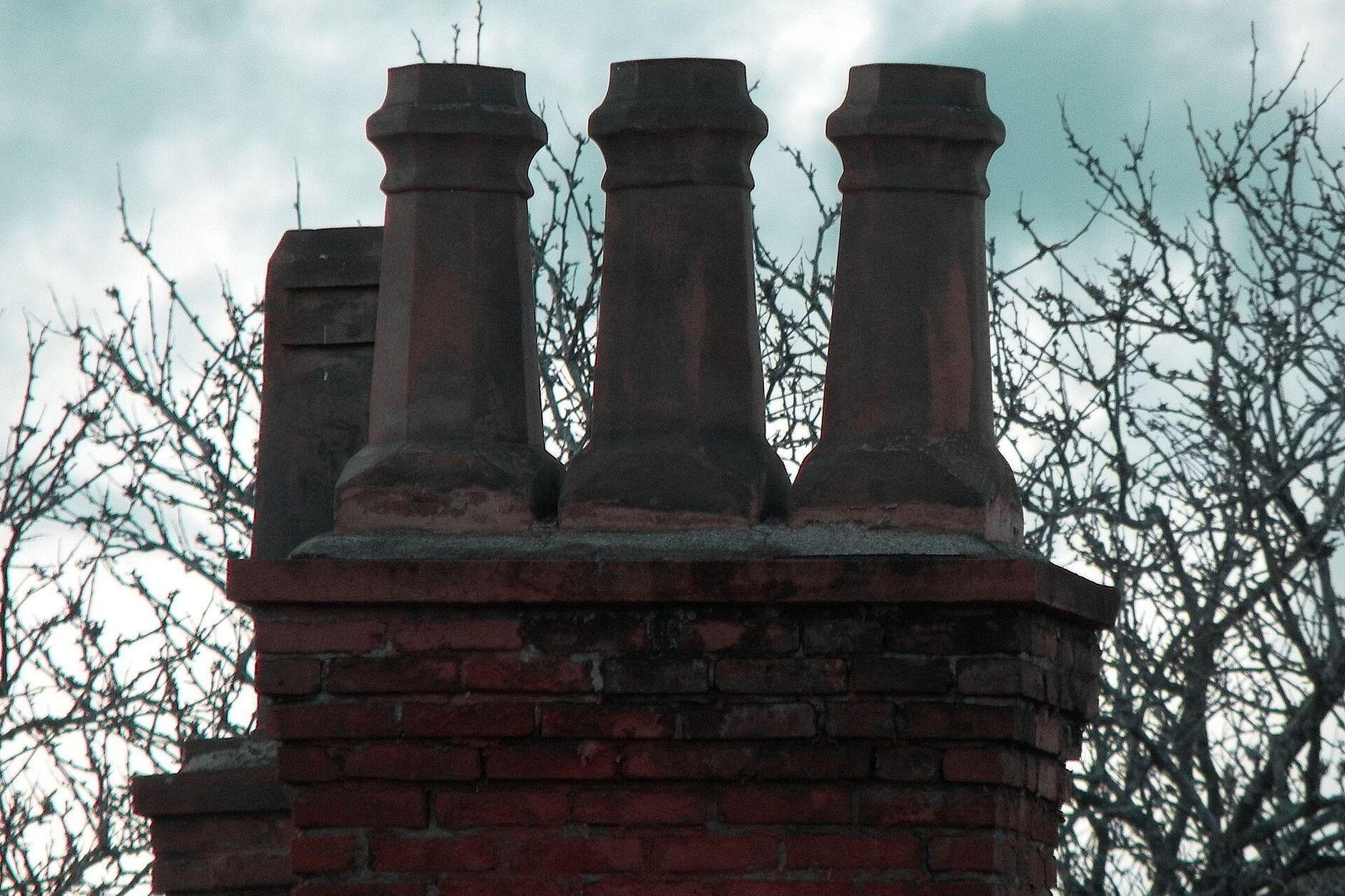
Picture bricks piled two stories high with a weak glue between them, standing beside a timber frame that flexes. When the ground moves, the frame bends and comes back to plumb. The stack cannot bend, and it does not always come back. The usual fracture line is where the chimney clears the shingles, since everything above that point stands alone with nothing beside it.
Southern California has tested this more than once. After the Whittier Narrows shaking in 1987 and again after the 1994 quake, broken and toppled brick chimneys were among the damage most often recorded on older houses around the Los Angeles basin. A chimney that came through those years may have done so with cracks nobody has gone looking for.
Option one: tie it to the house
Where the brick and mortar are still firm, steel can do the holding. Flat straps are bolted around the masonry and anchored into the ceiling and roof framing at each level the stack passes. A tall top can also be given a diagonal strut that lands on the roof structure. The fireplace and the brick everyone likes stay as they are.
Bracing has a precondition: straps need something solid to grip. If a screwdriver sinks into the mortar joints, or bricks can be rocked by hand, tying is off the table.
Option two: rebuild from the roof up
The exposed top is the part most at risk and the part most weathered. It can be dismantled to the roofline and put back lighter and stronger, either as new brickwork with reinforcing steel in it or as a framed top that carries a metal flue and is finished in brick veneer or stucco to suit the house. From the street the chimney reads the same, and the fireplace below is untouched.
Many remodels land here, because the crown, the cap and the flashing are renewed in the same job and the old leak paths leave with the old brick.
Option three: rebuild the whole chimney
When the mortar has failed along the full height, or the firebox itself has moved, the stack comes down to its base and goes up again to current practice, with steel, a proper liner and a new firebox. It is the largest of the four jobs and the only one that leaves nothing old in doubt. On a house whose fireplace face is being replaced anyway, the two projects share scaffolding, demolition and design.
Option four: stop asking it to carry a wood fire
Some owners decide the look matters more than the logs. A gas insert vents through two slim metal liners and does not need the full masonry flue, which widens the choices for the brick above the roof. In some houses the tall top can be lowered. The face, the mantel and the hearth are kept or restored, and the fire arrives at the press of a button. Fitting a gas insert to a firebox that is already there costs $2,800 to $5,650 with us.
Side by side
| Option | Suits | Fireplace afterwards |
|---|---|---|
| Straps and strut | Firm brick and mortar | Unchanged |
| New top from the roofline | Weathered or cracked top, sound base | Unchanged |
| Complete rebuild | Mortar gone throughout, shifted firebox | New firebox, face to choose |
| Gas insert, stack reconsidered | Owners finished with wood | Gas flame behind glass |
Bracing and rebuilding have no list price. Height, access, the amount of brick and the finish differ too much from house to house, so each option is priced in writing once the stack has been inspected. Where two options are both workable we price both, so the comparison is in dollars.
What the decision turns on
Start with the mortar. Then the height of the stack above the roof, since a short stout top behaves differently from a tall thin one. Then whether there is a liner, because a rebuild is the natural time to fit one and a brace does nothing for the flue. Then how the fireplace will be used. Last, how visible the chimney is: inside the Old Towne historic district, work that shows from the street can involve an extra step with the city, and structural work on a chimney generally needs a building permit wherever the house stands. The permits page explains how that tends to go.
All of those answers come out of one Level 2 inspection at $395. The camera reads the flue, and the technician probes the mortar, measures the top and photographs the stack in the attic, where cracks tend to show first. Ask for a stack assessment, and give the decade the house was built and roughly how far the chimney stands above the roof.
How it changes the look of the house
Owners worry that safety work will spoil a chimney they love. It need not. Much of the strapping sits inside the attic or close under the eaves, where it is hard to pick out from the street. A rebuilt top can reuse the original face brick where enough of it survives, or be laid in salvaged brick of the same color and size, with the same corbel at the top. Mortar is tinted and tooled to match the old joints. The one visible change is usually the cap, and that can be chosen to suit the roofline.
Inside, nothing has to change at all unless you want it to, and that is why the stack is settled before the face is designed.
Before the face, not after
A restored tile surround under a chimney that sheds bricks in the next quake is a poor trade. Settle the structure, then the flue, then the finish. The service pages on seismic retrofit, chimney rebuilds and liner installation take each job further, and the remodel pricing page covers what comes after. If your house in Orange predates the 1940s and the chimney has never been assessed, the contact page is the place to start.
Ready to Turn This Into a Plan?
Esposito Chimney Care surveys the firebox and flue, draws the new face to scale, and prices the work on paper. Crews travel out of Orange to Santa Ana, Garden Grove, Brea and the towns between.