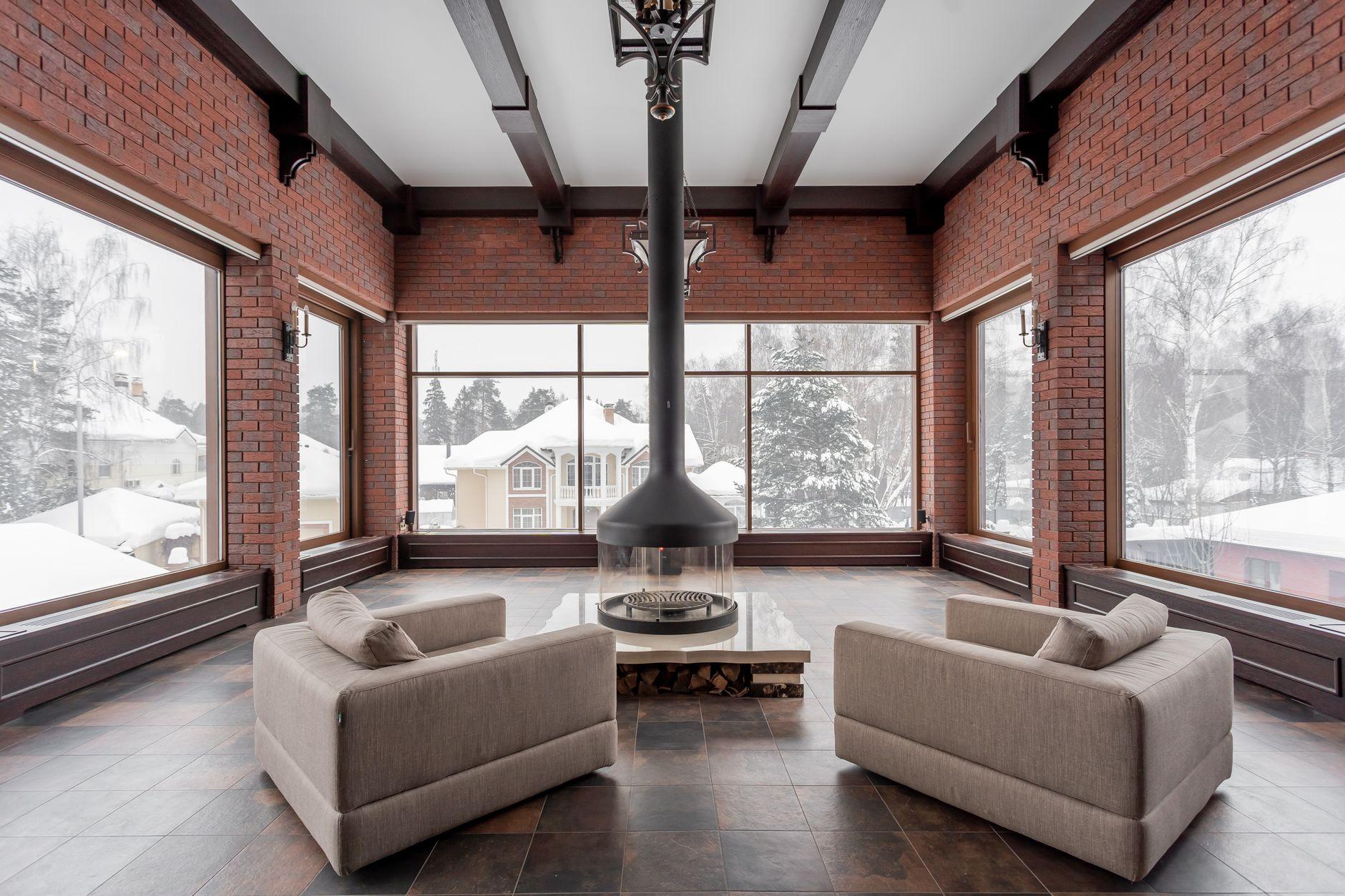

A new fireplace face is the most visible money in a remodel, and water is the quickest way to lose it. Plaster above a mantel will show a brown tide line after a single wet January. Stone veneer hides a leak for longer and then pushes a white crust out along its joints. In both cases the cause sits fifteen feet higher, at the top of the chimney, and it was there before the first tile was set.
This is the order we press for on every remodel in Orange: find the water, stop it, let the masonry dry, and only then build the face.
What a leak looks like from inside the room
The signs are mostly visual, and they are easy to mistake for age. A chalky white bloom on brick, which is salt carried outward by moisture. Paint that blisters on the chimney breast while the adjoining wall stays flat. A rust trail down the back of the firebox from the damper. A wooden mantel whose miter joints have opened. A sour, sooty smell in the room the morning after rain.
Orange gets most of its rain in a handful of winter storms, with long dry months between them. That pattern hides leaks. A joint that opened in the August heat does nothing visible until the first heavy storm, and by spring the stain has dried and faded and the fireplace looks ready for a new finish. It is not.
Where the water gets in
Almost always at the top, and usually at more than one point.
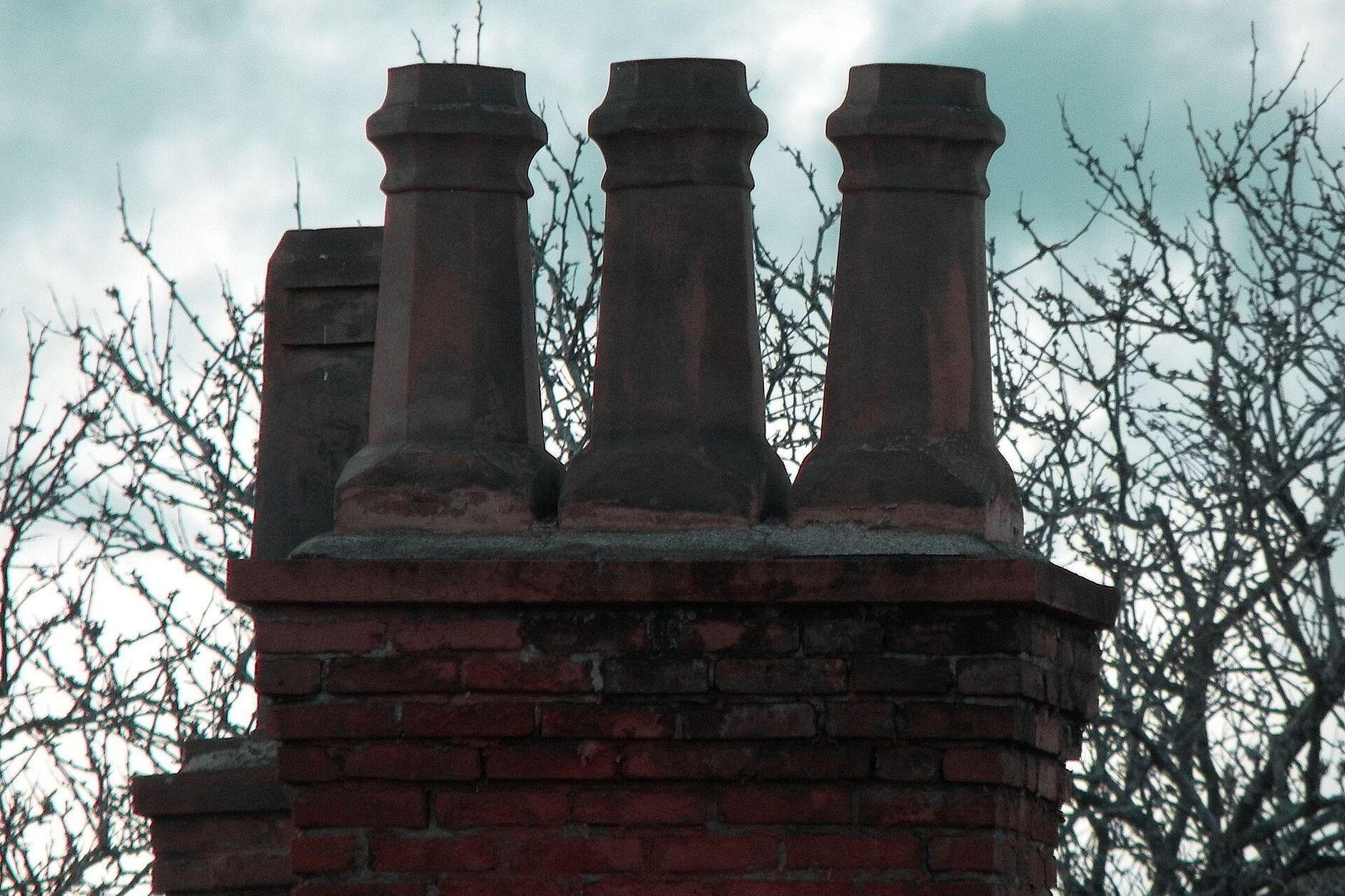
The crown is the mortar or concrete slab that closes off the stack around the flue. Sun bakes it for decades, it cracks, and each crack is a funnel into the brickwork beneath.
The cap is the hood over the flue opening. Where one is missing, every storm rains directly into the firebox.
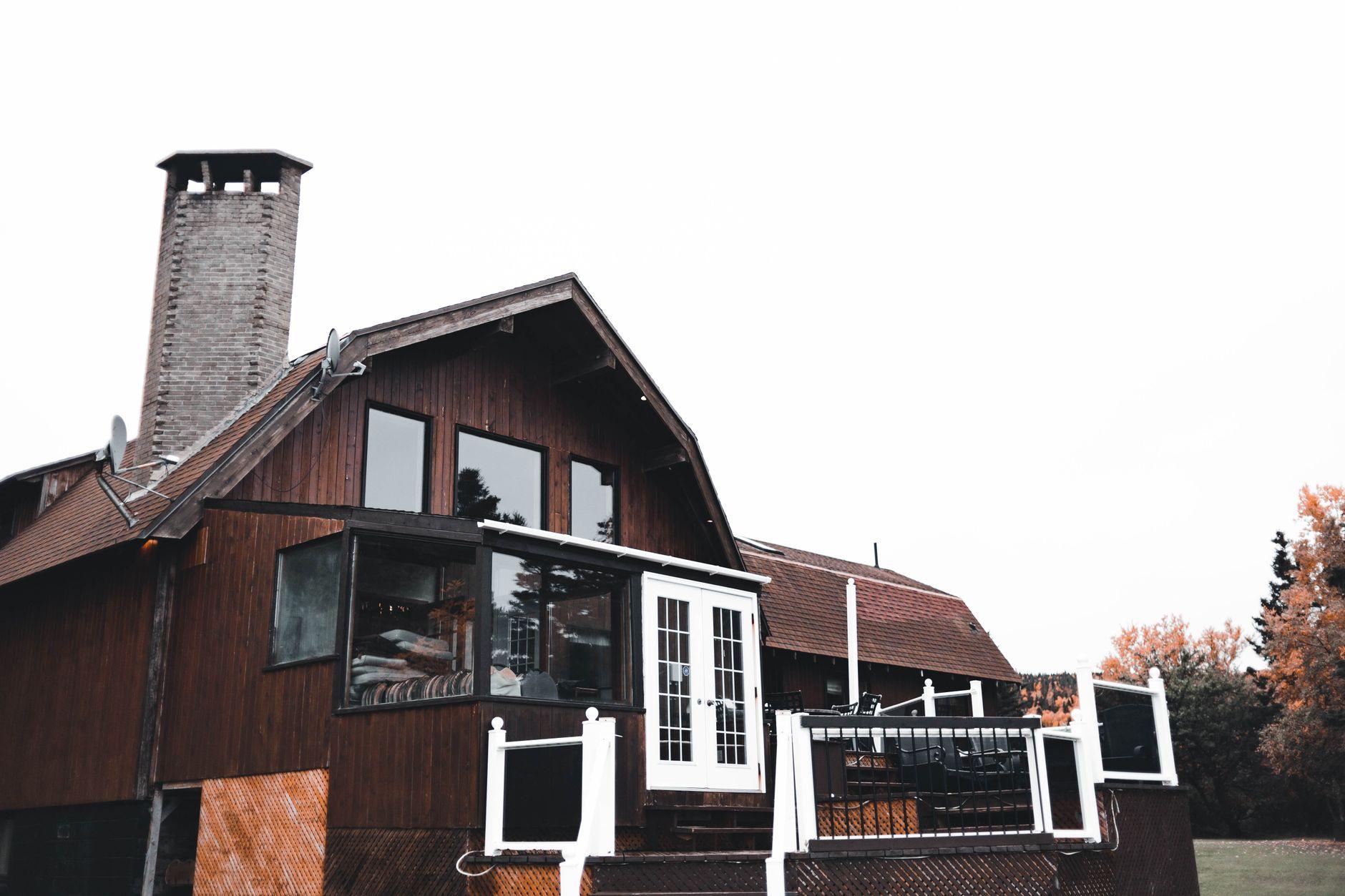
The flashing is the folded metal where roof and chimney meet. Sealant smeared along that joint in place of proper metal dries out and splits within a few summers.
On a broad chimney, the uphill face catches everything that runs down the roof. A roof saddle, which roofers call a cricket, is a small ridge built against that face to part the flow to either side.
Brick and mortar are themselves absorbent, and a wall that takes wind-driven rain for years can pass damp without a single crack in it.
On a factory-built fireplace the stack is a framed box with a sheet-metal lid, the chase cover. When that lid rusts and sags, water ponds on it and finds the seams.
Prices for the usual repairs
| Repair | Price |
|---|---|
| Tracking a leak to its entry point and closing it | $565 to $3,400 |
| Roof saddle against the uphill face of the stack | $450 to $1,020 |
| Saddle with all of the chimney flashing renewed | $680 to $1,700 |
Crown work, a new chase cover, flashing ordered by itself and water-repellent treatment have no list price. They are measured on the roof and given a written figure.
The spread inside each range has plain causes. A leak with one entry point on a low roof is a short job. A leak fed by a split crown and failed flashing together, three stories up, is not.
A cap over a single flue or across the whole crown is quoted on site. A stainless cap on one flue is the simplest job. A custom hood spanning a wide multi-flue crown costs the most.
Why the order matters to the finish
Masonry that has been wet holds moisture long after the roof is tight. Plaster or tile adhesive laid over damp brick cures poorly and may let go. Salts keep travelling to the surface for a season and will bloom through limewash and stain pale grout. So between the repair and the new face there is a wait, and its length depends on how wet the stack was and on the weather. We check the wall before any finish goes on and tell you when it is ready.
Water repellent comes last. It is a clear treatment that lets the wall breathe outward while shedding rain, and it earns its place on a sound chimney that faces the weather. Sprayed over a cracked crown or open joints it only traps damp, which is why it is never our first suggestion.
Planning it into a remodel
When a remodel is already on the calendar, the roof work goes first on the schedule and the face last, with firebox repairs and any gas work in between. Seen that way the leak repair rarely lengthens the project: the masonry dries while the stone is being chosen and ordered.
The Level 2 inspection at $395 that begins a remodel also photographs the crown, the cap and the flashing, so the leak sources and the design measurements come out of one visit.
There is a design point here too. The parts that keep water out are visible from the street, and they can be chosen with the same care as the mantel. A cap whose metal and outline suit the roof, a crown with a clean square edge, flashing in a tone close to the gutters: none of it costs the house its looks, and it spares you redoing a stained wall.
What decides the next step
If the stain is old and has never changed, the cause may already have been fixed by a past roofer, and an inspection will say so. If it darkens after rain, something is open now. Ask for a leak visit, and write where the stain is, how far above the mantel it sits, and whether it changes after a storm.
The repair pages for chimney leaks, crowns and waterproofing describe each job. For the face that follows, see the remodel pricing page. To have the top of your chimney looked at before the design goes any further, begin at the contact page.
Ready to Turn This Into a Plan?
Esposito Chimney Care surveys the firebox and flue, draws the new face to scale, and prices the work on paper. Crews travel out of Orange to Santa Ana, Garden Grove, Brea and the towns between.